I Lived in a Literature Museum in Barcelona
Here’s something I never thought I’d say; I spent three weeks living in a literature museum in Barcelona, Spain. But it’s true. I spent the last week of May and the first two weeks of June, 2026, living on the top floor of the Villa Joana History Museum, because I was selected for a literary residency hosted by the Barcelona Institute of Culture. I was one of three international authors in residence at the time.
As a self-declared overachiever when it comes to writing, I came to this residency with a laundry list of projects I wanted to accomplish. I saw myself writing from morning to night, taking advantage of the solitude and freedom from my duties as an entrepreneur, mother, and content creator. What I didn’t plan on however, was being seduced by all of Barcelona’s literary charms, as well as the spirit of the poet who haunts the Villa Joana.
The Museum and Its Ghosts
My intentions with this residency, were to write as much as possible, so I spent more time inside than hanging out in Barcelona’s literary streets. But when you live in a literary museum, distractions still abound.
The first floor of the museum at Villa Joana is dedicated to the importance of literature as a concept. It is a small but thoughtful exploration of the power, influence and impact of storytelling worldwide. There are interactive exhibits that highlight global origin stories, sexism in the publishing world, the politics of translation and more. All told, the museum helps visitors contextualize and appreciate the ubiquitous impact and power of the written word.
Many times I would take breaks from my writing to stroll through the museum to remind myself that my work was more than just about getting the words down on the page. That my books were part of something bigger that my personal literary journey. That being a writer means I am part of a special group of people tasked with making meaning from this little life. So yes, one could say my meandering through the halls of the museum was a form of procrastination, but really, I was feeding my soul.
The Priest-Poet Who Still Haunts Me
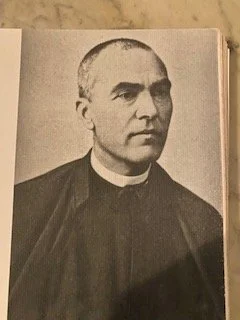
Verdaguer, The priest-poet who haunts me.
The second floor of the museum is where I went to feed my imagination. The second floor of Villa Joana houses the homage to Jacint Verdaguer, considered the national poet of Catalonia. The Verdaguer exhibit – personal objects, videos, photos, and interactive experiences – tries to capture the complicated and incredibly impactful life of this priest-poet, who was born into a humble family and then rose in the ranks of the priesthood to become the personal priest for one of the wealthiest families in Barcelona. All the while, he was writing and publishing copious amounts of poetry. (He published over 20 books before he died, and reportedly another 20 were published after he died.)
But here’s the part that is often glossed over in Verdaguer lore. The family that Verdaguer worked for built their fortune via the Transatlantic Slave Trade and Verdaguer was required to be the resident priest on his employer’s slave ships. Apparently this weighed on his soul, and during the later years of his life, Verdaguer rebelled against the wealthy and the church – he also got into some supernatural fringe spiritual groups that practiced unsanctioned exorcisms which was a no-no – and in turn the elite and the church stopped supporting him. When he died of tuberculosis, at age 57, Verdaguer was penniless and a thorn in the side of the church, but he had become a hero to the common folk. His funeral was attended by over 30,000 people, who flooded the streets of Barcelona to pay their respects.
As a storyteller, I could not stop thinking about this priest-poet who lived such a complicated yet compelling life. I also couldn’t help but wonder if Verdaguer’s spirit lingers in the museum. I originally thought the museum was where Verdaguer lived, but the truth is, it’s where he came to die. He spent the last three weeks of his life living dying at Villa Joana, which coincided with the three weeks we were in residence. The bed where he died is part of the museum exhibit!
Hair Story in Barcelona
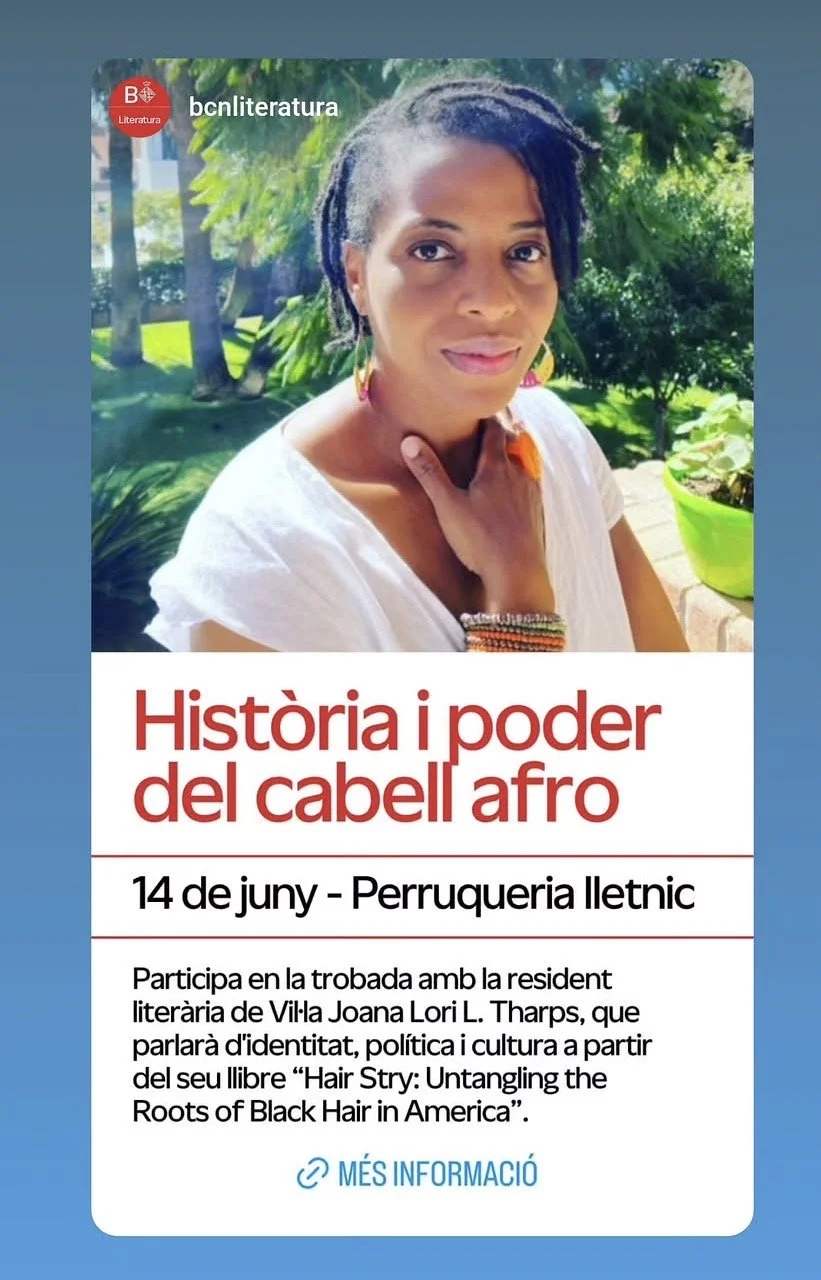
The annoucement for my Hair Story talk in Barcelona.
Probably the best part of participating in the Villa Joana Residency was the care the organizers from the City of Literature took in introducing the residents and our work to the wider Barcelona community. They were very thoughtful in curating events and/or opportunities that were in alignment with our areas of interest and/or expertise. One author had a book signing at a local bookstore, whereas they organized an event for me at a local Black hair salon, because I decided to talk about Hair Story.
The talk occurred at Iletnic, a wonderful natural Black hair salon in Barcelona. I gave a talk in Spanish – my first ever book talk in Spanish – called “Black Hair Across Borders.” During my presentation, I spoke about the universality of the Black hair experience, when Black hair is taken out of an all-Black cultural context. It was incredibly rewarding to see the women in the audience nodding along, especially when I found out that they represented so many different countries including Haiti, Cuba, the Dominican Republic and Equatorial Guinea.
Having the chance to connect with Black women who call Barcelona home via my Hair Story talk warmed my spirit, and definitely made me want to return to this city for more than just the books and bookish culture. While my home in Spain will always be in Andalusia, Barcelona marked me, and I know I will come back again.